
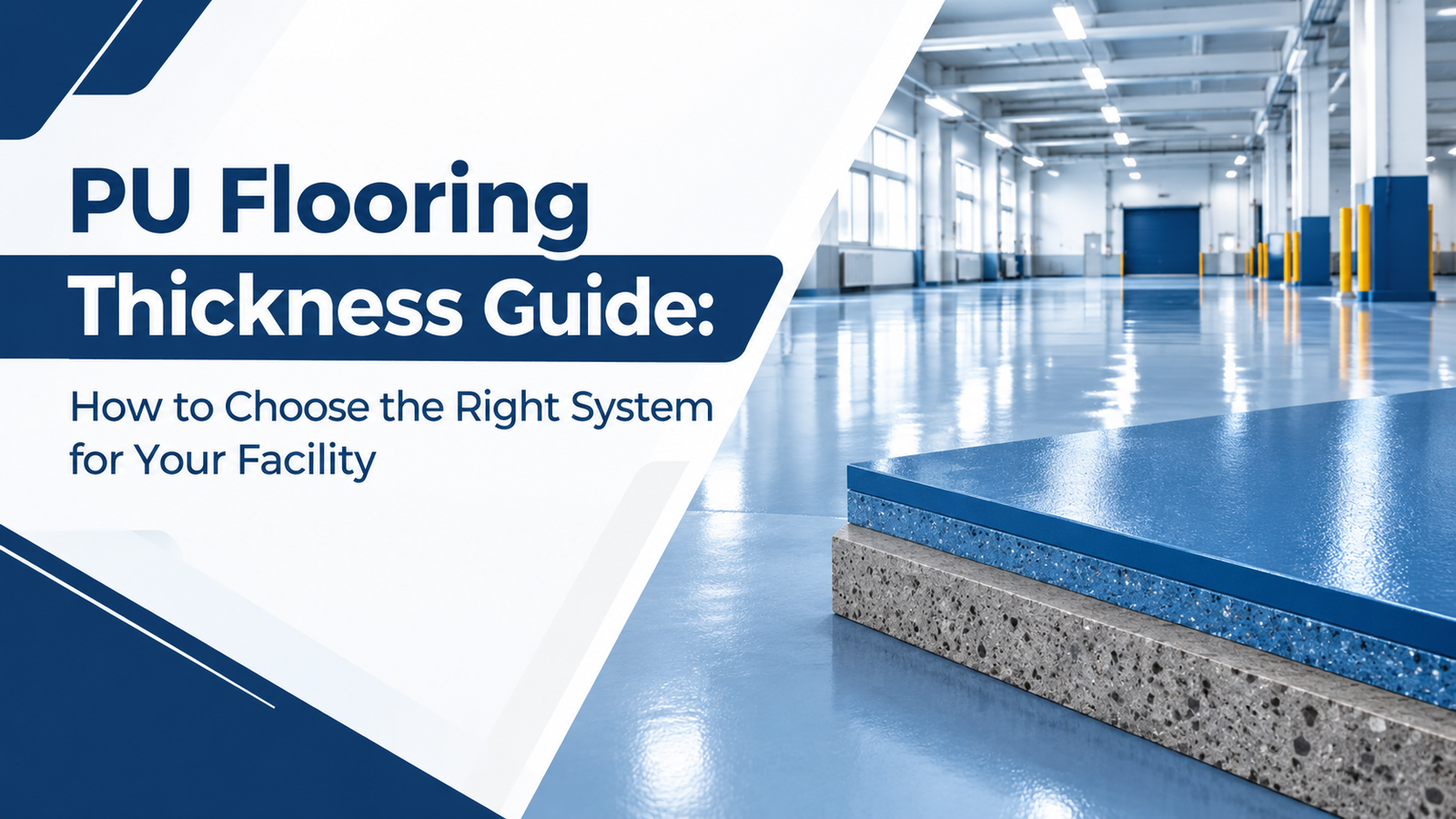
Selecting an optimal PU Flooring thickness is essential to achieve performance in industrial and commercial settings. The thickness requirement is based on parameters like load-bearing capacity, chemical resistance, wear resistance, temperature fluctuation, sanitation standards, and existing floor condition.
Facilities that include manufacturing units, warehouses, food processing units, and pharmaceutical industries can benefit from an optimal industrial PU flooring solution provided by Conpro Chemicals.
What Is the Right PU Flooring Thickness?
There is no single thickness suitable for every application. A flooring system should be specified according to the operating conditions and expected load.
| Application | Typical Thickness | Performance Requirement |
| Light-duty areas | 2–3 mm | Pedestrian traffic and routine wear |
| Moderate industrial areas | 3–4 mm | Vehicle traffic and mechanical loads |
| Heavy-duty industrial areas | 4–6 mm | High traffic, impact and abrasion |
| Food & pharmaceutical facilities | 4–6 mm | Hygiene, chemical and thermal resistance |
| Severe-duty environments | 6 mm+ | Heavy impact and demanding conditions |
What Determines PU Flooring Thickness?
1. Traffic and Mechanical Loads:
The locations where forklifts, hand trucks, carts, or any heavy machinery is used need to have more abrasion and impact resistance. It is advisable to first check the kind and volume of traffic before choosing the floor.
2. Chemical Exposure:
The places where forklifts, hand trucks, carts, or any machinery is in use require greater durability against impact and abrasion. It is always better to consider the nature and quantity of traffic that should go through before deciding on the flooring.
3. Temperature and Thermal Shock:
Food processing, refrigeration, and manufacturing plants might have fast-changing temperatures, hot water cleaning, or even steam treatment. An adequately designed polyurethane coating will give better resistance against thermal shock and thermal stress.
4. Concrete Substrate Condition:
Despite a highly efficient PU flooring system, one should bear in mind that a poor concrete substrate can never be remedied by such a system.
PU Flooring Applications
Industrial PU flooring is commonly specified for environments where traditional flooring may not provide sufficient durability, hygiene, or chemical resistance, including:
- Food and beverage processing plants
- Pharmaceutical manufacturing units
- Automotive and engineering facilities
- Warehouses and logistics centres
- Commercial kitchens
- Laboratories and clean areas
PU Flooring Cost: What Factors Affect the Price?
The PU flooring cost per square foot is influenced by more than material thickness. The key cost factors include:
- Required flooring thickness
- Floor area and site condition
- Concrete repair and surface preparation
- Resin and aggregate specification
- Chemical and thermal resistance requirements
- Application method and project complexity
Sometimes, an increased initial specification is actually more cost-effective in the lifetime of the flooring due to fewer repairs and replacements needed.
How to Select the Right PU Flooring System?
While selecting the best PU flooring suppliers in India, one needs to focus on more than just pricing. Find out if the supplier or flooring expert offers:
- Application-specific system recommendations
- Appropriate thickness specifications
- Technical guidance on substrate preparation
- Chemical and thermal resistance information
- Professional installation support
- Clear product and performance specifications
The objective should be to select a flooring system designed around the facility’s actual operating conditions—not simply the lowest-cost option.
Conclusion
The right thickness of the PU floor is dependent on the load, traffic, chemical resistance, temperature, cleaning requirements, and condition of the substrate. The right system will deliver a durable and maintainable floor for harsh industrial conditions. For accurate and reliable results, you may seek the assistance of an expert PU floor manufacturer such as Conpro Chemicals.
Frequently Asked Questions:
1. How thick is the standard PU floor?
PU floor comes in thicknesses that vary between 2 mm and 6 mm, and even above. The thickness of the floor is usually dependent on various factors such as traffic, load, chemical exposure, and other application needs.
2. Which one is four times stronger than epoxy?
The PU floor provides better flexibility and resistance to impact and thermal shock when compared to the traditional epoxy floor system.
3. What thickness do I need for my flooring?
The thickness you need will depend on traffic, load, chemical exposure, and other factors such as temperature and substrate conditions.
4. What kind of flooring is the best?
When it comes to an industrial environment, PU flooring is recommended for the following reasons.